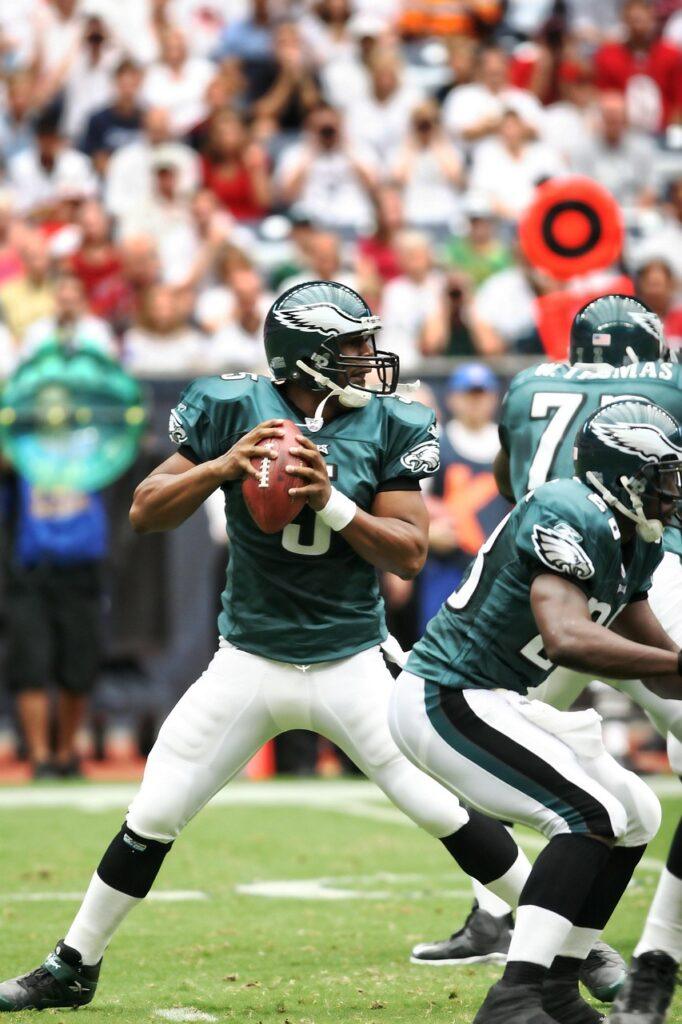
When a quarterback gets sacked, the blame usually falls in one of two places:
-
“The offensive line collapsed.”
-
“The quarterback didn’t feel the pressure.”
Both can be true — but neither explains why holding the ball too long causes so many problems for quarterbacks at every level of the NFL.
Sacks, interceptions, hurried throws, and stalled drives often trace back to the same issue: decision timing.
Holding the Ball Too Long Is a Timing Problem, Not a Toughness Issue
Quarterbacks are taught to be tough in the pocket. They are praised for standing in and delivering throws under pressure.
But toughness does not mean waiting forever.
When a quarterback holds the ball beyond the designed timing of the play, several things begin to break down — regardless of how good the offensive line or receivers are.
Holding the ball too long is not about courage.
It is about recognition, confidence, and timing.
The NFL Passing Game Is Built on Windows, Not Routes
Most NFL passing concepts are designed around timing windows, not wide-open receivers.
Those windows:
-
Appear briefly
-
Close quickly
-
Rarely reopen
When a quarterback hesitates:
-
Pressure has more time to arrive
-
Passing lanes tighten
-
Receivers move out of leverage
-
Decisions become reactive instead of proactive
The play often looks like protection failed — when in reality, timing failed first.
How Time to Throw Helps Explain the Problem
One of the most useful metrics for understanding this issue is Time to Throw — the average time between the snap and the release of the ball.
Time to Throw does not tell the whole story, but it helps frame key questions:
-
Is the quarterback consistently late relative to league norms?
-
Is pressure arriving faster than expected?
-
Do decision times change by down, distance, or situation?
A quarterback who consistently holds the ball longer than average is exposed to:
-
Higher sack rates
-
Increased hit frequency
-
Forced throws late in the down
The issue compounds over time.
When Sacks Are on the Quarterback — and When They Aren’t
Not all sacks are created equal.
Some sacks are the result of:
-
Immediate pressure
-
Missed protections
-
Free rushers
Others happen because:
-
The quarterback bypasses available options
-
The ball is not thrown on rhythm
-
The pocket is abandoned unnecessarily
Holding the ball too long often turns manageable plays into negative ones — even with adequate protection.
This distinction matters when evaluating quarterback performance.
Why Arm Talent Can Make the Problem Worse
Quarterbacks with strong arms often believe they can:
-
Wait longer
-
Throw later
-
Recover after hesitation
Sometimes they can.
But over time, this habit:
-
Invites pressure
-
Increases hits
-
Disrupts offensive rhythm
The NFL rewards quarterbacks who make earlier decisions, not later miracles.
What Holding the Ball Too Long Looks Like on Film
You don’t need advanced film access to spot it.
Common signs include:
-
The quarterback patting the ball multiple times
-
Hesitation after the first read
-
Drifting deeper in the pocket without purpose
-
Throws made only after pressure arrives
These moments are often followed by sacks, throwaways, or rushed completions.
Why This Problem Gets Worse Over a Season
Holding the ball too long doesn’t just affect one play.
Over time:
-
Pass rushers adjust
-
Defenses disguise more
-
Hits accumulate
-
Confidence erodes
Quarterbacks begin to feel pressure even when it’s not there — creating a feedback loop that’s hard to escape.
How Context Changes Everything
Holding the ball too long is more damaging in certain situations:
-
Third down
-
Red zone
-
Late-game scenarios
-
Obvious passing downs
In these moments, defenses expect the pass and close windows faster.
What feels like patience early in the game can become hesitation later.
What to Watch for as a Fan
Instead of focusing on the sack itself, watch what happens before it.
Ask:
-
Was there an earlier decision available?
-
Did the quarterback trust the timing of the play?
-
Did hesitation invite pressure?
Often, the sack is the final mistake — not the first.
Why This Matters for Quarterback Development
Holding the ball too long is not a permanent flaw.
It can improve with:
-
Experience
-
Scheme stability
-
Repetition in similar situations
-
Better understanding of timing
That’s why some quarterbacks look overwhelmed early — and composed later.
Where This Study Goes Next
This breakdown builds on our earlier look at quarterback processing speed.
Next, we’ll explore:
-
How pocket movement supports faster decisions
-
Why subtle movement matters more than scrambling
-
How elite quarterbacks manage pressure without panic
In the NFL, timing isn’t everything — but it’s close.